
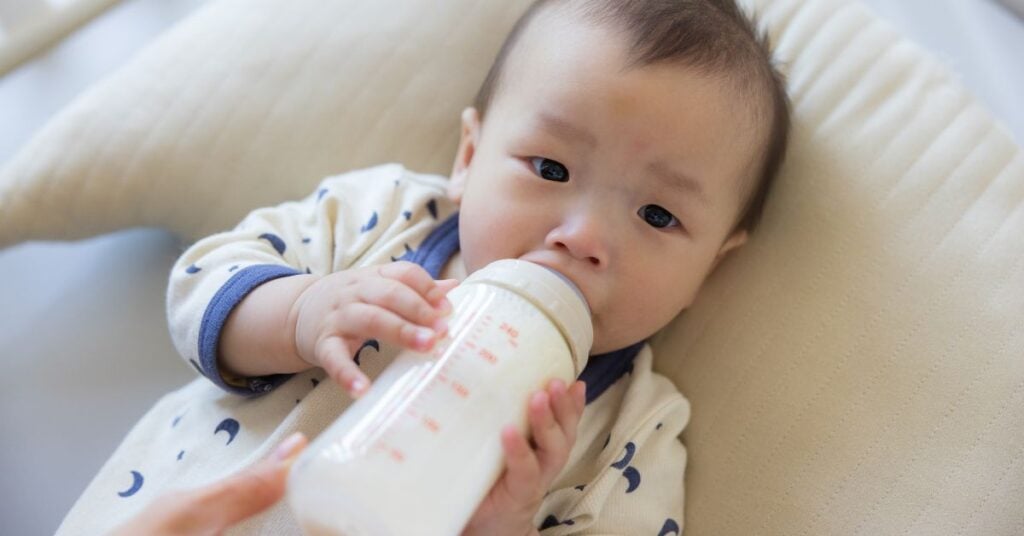
Most newborns drink 1–3 ounces every 2–3 hours; by 6 months many take 6–8 ounces per feed, with 24–32 ounces of breast milk or formula daily.
Introduction And Quick Answer
New parents ask this early: how much should a baby drink? Babies don’t follow a perfect clock, so the smart move is to use ranges and read cues. This guide gives age-by-age amounts, clear daily totals, and safety rules for breast milk, formula, and the start of solids.
How Much Should A Baby Drink? By Age And Feeding Type
Use the ranges below as a practical baseline. Your baby’s appetite will swing day to day. Growth spurts, naps, and milestones all nudge intake up or down. If your baby was preterm or has a medical condition, follow your clinician’s plan.
Table: Typical Intake By Age (Breast Milk Or Formula)
| Age | Ounces Per Feed | Feeds In 24 Hours |
|---|---|---|
| 0–2 days | 0.5–1 oz | 8–12 |
| 3–7 days | 1–2 oz | 8–12 |
| 2–3 weeks | 1.5–3 oz | 8–12 |
| 1 month | 3–4 oz | 7–9 |
| 2–3 months | 4–5 oz | 6–8 |
| 4–5 months | 5–6 oz | 5–7 |
| 6 months | 6–8 oz | 4–6 |
Why Ranges Vary
Stomach size grows quickly in the first weeks. Breastfed babies often take smaller, more frequent feeds at first, then settle into a rhythm. Bottle-fed babies may stretch time between feeds sooner. Evening cluster feeding is common and doesn’t mean supply is low.
Daily Totals That Make Sense
Across a full day, many babies land between 24 and 32 ounces of breast milk or formula through the first half-year. Some days hug the edges of that band. What matters most is steady weight gain, enough wet diapers, and a relaxed baby between feeds.
How Much A Baby Should Drink Per Day — Practical Ranges
Birth To 1 Week
Feeds are tiny and frequent. Expect 8–12 sessions in 24 hours. Focus on latch quality over exact ounces. If bottle-feeding, begin with 0.5–1 ounce each feed and increase as cues show.
Weeks 2–4
Intake rises fast. Many babies take 1.5–3 ounces per feed. Nights can still include several wake-ups to feed; that’s normal while weight is establishing.
1–3 Months
Most babies take 3–5 ounces per feed and go 3–4 hours between daytime feeds. Short growth spurts may bump both frequency and volume for a couple days.
4–5 Months
Babies often take 5–6 ounces per feed. Wake windows are longer, so spacing may widen a little. Milk remains the primary calorie source.
Around 6 Months
Many babies take 6–8 ounces per feed while starting solids. Offer milk before solids so total intake doesn’t dip. Solids are for practice early on, not replacement.
Hunger Cues You Can Trust
Early cues: stirring, rooting, hand-to-mouth, lip smacking. Late cues: crying, rigid body, frantic movements. Try to feed on early cues so latch and bottle pace stay calm and effective.
Fullness Cues That Say “I’m Done”
Look for relaxed hands, turning away, slower sucking, milk pooling at lips, or dozing off. Stop when those show up. Pushing extra ounces can upset tummies and teach overeating.
Breastfeeding Notes That Help
In the early days, frequent, effective latching builds supply. Many newborns nurse 10–12 times in 24 hours. Once established, intake for exclusively breastfed babies often centers around 25–30 ounces per day, but pattern and growth matter more than any single bottle number. For stage-by-stage norms, see the AAP guidance on how often and how much babies eat.
Bottle-Feeding Without Overdoing It
Use a slow-flow nipple and “paced” technique so a bottle doesn’t drain faster than appetite. Hold baby upright, tip the bottle more horizontal, and pause every few minutes to burp and check cues. Most full-term babies don’t need more than 32 ounces in a day; if you’re routinely above that, ask your clinician if the bottle size or flow needs a tweak.
Safe Formula Prep And Storage
Mix per the can’s scoop lines; don’t “pack” scoops or add extra powder. Use prepared formula within two hours, or within one hour from the start of a feed. If untouched, a prepared bottle can chill up to 24 hours. Toss leftovers from the bottle after a feed—saliva plus formula grows bacteria fast. Review the CDC guide on preparation and storage for the latest safety steps.
Storing And Serving Expressed Milk
Use clean containers and label dates. Fresh milk can sit at room temp for a short window, then goes to the fridge. For longer storage, freeze portions you’ll use within months. Thaw in the fridge or under cool then warm running water. Never microwave milk; hot spots can burn.
When Solids Start, What Changes?
At about six months and when readiness signs show (good head control, interest in food, ability to sit with support), offer small tastes once or twice a day. Keep milk first, then solids. As textures and portions expand, daily milk may drift toward the lower end of the 24–32 ounce band. If totals dip sharply, scale solids back and check in with your clinician.
Simple Math For Formula Days
A quick estimate many families use is ~2–2.5 ounces of formula per pound of body weight across 24 hours, maxing around 32 ounces. Treat it as a starting point, not a rule. Watch diapers, mood, and growth to dial in your baby’s true need.
How Much Should A Baby Drink? Special Cases
Preterm babies, babies with reflux, cardiac concerns, or feeding challenges can follow different plans. Pumping, fortification, or thickening might be recommended. Always follow your medical team’s guidance in these situations.
How To Read Diapers And Growth
Wet diapers are a handy gauge. Expect one or two wets on day one, then a steady climb to six or more by the end of the first week. Stools shift—from meconium to mustard-yellow in breastfed babies, and peanut-butter-like for many formula-fed babies. A growing stack of outgrown onesies and steady gains on the chart confirm intake over time. If you still wonder how much should a baby drink, check the age ranges, re-read cues, and adjust.
Table: Hunger And Fullness Cues You’ll See
| Cue | What It Looks Like | What To Do |
|---|---|---|
| Hunger (early) | Rooting, hands to mouth, lip smacking | Offer a feed soon |
| Hunger (late) | Crying, arching, frantic moves | Calm first, then feed |
| Fullness (subtle) | Slower suck, relaxed hands | Pause and check |
| Fullness (clear) | Turning away, sealed lips | End the feed |
| Discomfort | Grunting, pulling legs up | Burp, reposition |
| Drowsy, not hungry | Dozing at start | Wait, try later |
| Fast flow | Coughing, gulping | Use slower nipple |
Paced Bottle-Feeding: Quick How-To
Hold your baby semi-upright. Keep the bottle more horizontal so flow stays gentle. Let your baby draw the nipple in. Pause every few minutes to burp and check comfort. Switch sides midway to mimic breast alternation. Stop when fullness cues appear—even if milk remains.
Night Feeds And Long Stretches
Many newborns wake every 2–3 hours. As months pass, some babies rack up longer stretches at night; others keep one or two feeds overnight well into month six. Both patterns are normal. Total 24-hour intake matters more than a single long stretch.
Signs You Should Call Your Pediatrician
Fewer than six wet diapers per day after day five. No stool for several days with fussiness or a hard belly. Persistent vomiting, not just easy spit-up. Painful latch or clicking that doesn’t improve with help. Rapid weight loss or slow gain. Lethargy, fever, or dehydration signs like a dry mouth and no tears.
Breast Milk Or Formula: Which First With Solids?
Offer milk before solids during the early months of weaning. That keeps intake steady while your baby learns to chew and swallow. As meals grow, milk can follow solids at some sittings, but total daily ounces should still sit inside healthy ranges through year one.
Water, Juice, And Other Drinks
Skip water and juice before six months unless advised clinically. After six months, small sips of water with meals are fine, especially in hot weather. Hold juice until year one and keep it rare after that—whole fruit builds better habits.
Tools And Routines That Reduce Stress
Keep a simple log for the first weeks to spot patterns. Bring it to checkups. Use bottle sizes that match the stage so you aren’t nudged to overfeed. If breastfeeding, get hands-on help early; small tweaks to latch, position, or timing can change everything.
What If Your Baby Seems Always Hungry?
Check for a growth spurt first. Then look at bottle flow—too slow can frustrate, too fast can flood and lead to more spit-up. For breastfeeding, try more frequent, focused sessions and ask about a weighted feed to see actual milk transfer. If intake is already high but fussiness continues, discuss reflux, allergy, or tongue-tie with your clinician.
Travel Days And Caregiver Hand-Offs
Pre-portion bottles and label them with ounces and times. Share a one-page cue card so caregivers pace feeds like you do. For pumped milk on the go, pack an insulated cooler with ice packs and a small bottle brush and soap in a zip bag.
How Much Should A Baby Drink? Bottom Line
Babies thrive when we follow their cues and keep intake inside sane ranges. Use the tables, watch diapers and growth, protect safety with correct prep and storage, and keep questions coming to your care team. If the plan stops working, tweak it—your baby will show you what fits.