
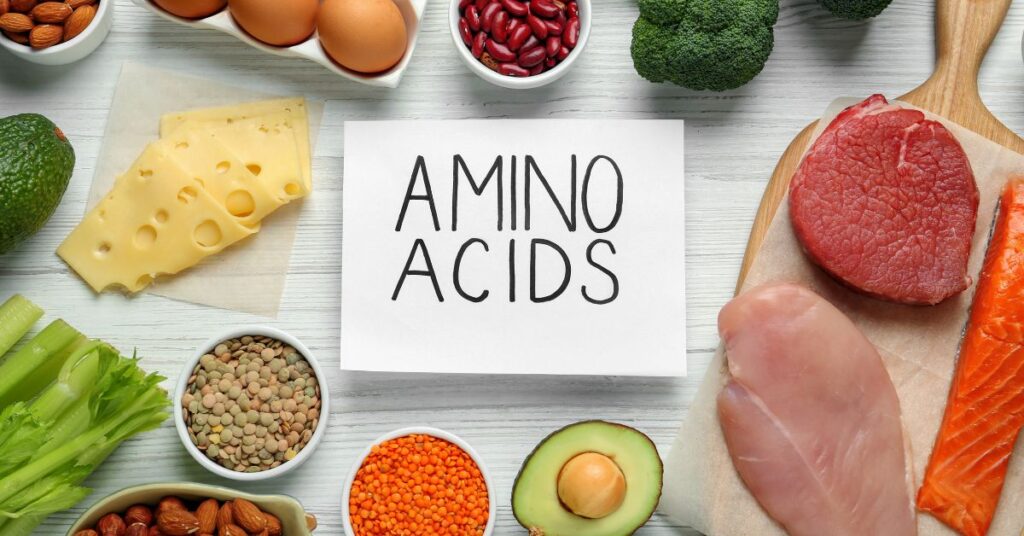
Most people who lift do well with about 1.6–2.2 grams of protein per kilogram of body weight per day to supply enough amino acids for muscle gain.
If you type “how much amino acids per day to build muscle?” into a search bar, you are instead asking how much total protein you need, since each gram of protein you eat breaks down into amino acids in your body. Sports nutrition research gives clear ranges you can use right away without a calculator at every meal.
Why Amino Acids Matter For Muscle Growth
Muscle tissue is built from amino acids. When you train with weights you create small amounts of damage in the muscle fibers. Your body repairs that damage using amino acids from the protein you eat, and over time those repair cycles add new muscle tissue.
There are nine indispensable amino acids that your body cannot make on its own. You have to get them from food. Once your daily intake covers those needs, strength training can shift more of those building blocks toward muscle growth instead of just maintenance.
Research summaries from the International Society of Sports Nutrition position stand on protein and exercise and later meta analyses show that muscle gains rise as daily protein moves up to around 1.6 grams per kilogram of body weight, with smaller extra benefits up to roughly 2.2 grams in some lifters.
How Much Amino Acids Per Day To Build Muscle? Daily Ranges By Body Weight
Sports dietitians often translate the research on amino acids and protein into a daily range of 1.6–2.2 grams of protein per kilogram for people who lift regularly. That range covers most healthy lifters who train hard and want more muscle. The lighter end often suits smaller or less active people. The higher end is common for heavy training blocks or when you eat in a calorie deficit.
| Body Weight | Daily Protein Range | Notes For Muscle Gain |
|---|---|---|
| 50 kg / 110 lb | 80–110 g | Smaller frame, start near 80 g and raise if training volume climbs. |
| 60 kg / 132 lb | 95–130 g | Works well for many smaller lifters and active beginners. |
| 70 kg / 154 lb | 110–150 g | Common range for intermediate lifters at this body size. |
| 80 kg / 176 lb | 125–175 g | Useful for taller lifters or those with heavier training weeks. |
| 90 kg / 198 lb | 145–195 g | Stay near the top end during intense programs or fat loss phases. |
| 100 kg / 220 lb | 160–220 g | High range that suits strength athletes with demanding schedules. |
| 110 kg / 242 lb | 175–240 g | Large frame lifters may feel best near the middle of this span. |
These numbers line up with a large meta analysis in the British Journal of Sports Medicine, which found that strength and muscle gains level off once protein reaches around 1.6 grams per kilogram per day for most people who train with weights.
Converting Protein Grams To Amino Acids
When you eat 100 grams of high quality protein across the day, almost all of that amount ends up as a mix of amino acids in your bloodstream. A typical protein powder scoop with 25 grams of protein gives around seven to ten grams of indispensable amino acids, with about two to three grams of leucine, the amino acid strongly linked to triggering muscle protein building.
Exact Daily Target Or Range?
The research does not point to one single exact gram number of amino acids per day that fits everyone. Instead, a range is more realistic. Body size, training style, training age, and calorie intake all shift how much protein you can use for muscle growth each day.
For most healthy adults who lift two or more days a week, a practical target is 1.6 grams of protein per kilogram as a daily minimum. Then you can move toward 2.0–2.2 grams if you train with high volume, have a lot of muscle already, or run a leaner diet and want to protect muscle while dropping fat.
Amino Acids Per Day For Muscle Growth Targets
Even though the main driver for muscle gain is daily protein, it still helps to think in terms of amino acids. Protein sources that include all indispensable amino acids in good amounts are sometimes called complete proteins. Many animal foods land in that group, while plant foods often need to be combined across the day.
If you stick near the 1.6–2.2 grams per kilogram range using a mix of dairy, eggs, meat, soy, and other higher protein foods, you will more than cover your daily requirement for indispensable amino acids. That means you can treat separate EAA or BCAA supplements as optional, not mandatory for growth.
Measuring Your Current Intake
To check your intake, track protein with a food app or labels for three usual days. Add each day, divide by your body weight in kilograms, and note the result. If it sits below about 1.4 grams per kilogram, raising intake can help muscle gain.
Timing And Spacing Of Amino Acids Across The Day
Total daily intake matters most for muscle growth, but when you eat that protein still plays a secondary role. Strength training raises muscle protein building for many hours after a session, and a steady stream of amino acids helps you take advantage of that window.
Sports nutrition experts often suggest spreading protein across three to five meals or snacks. A handy target is around 0.4 grams of protein per kilogram at each main meal. For a 70 kilogram lifter, that means around 25–30 grams of protein at breakfast, lunch, and dinner, with extra smaller servings around workouts if needed.
Before Bed Protein
A moderate serving of protein in the evening can help overnight muscle repair. Casein rich foods such as Greek yogurt, cottage cheese, or a slow digesting protein shake release amino acids over several hours while you sleep.
How Much Amino Acids Per Day To Build Muscle For Different Goals
The answer to “how much amino acids per day to build muscle?” shifts a little with your training and body composition goals. A lean beginner who lifts three days a week does not need the same intake as a strength athlete deep into a heavy program.
Building Muscle In A Calorie Surplus
If you eat above maintenance calories and gradually gain weight, you can often stay near the lower end of the 1.6–2.2 grams per kilogram range. The extra energy makes it easier for your body to use amino acids for building new tissue instead of burning them for fuel.
Recomp Or Leaning Down
When you eat fewer calories to lose fat, protein needs tend to rise. Your body faces more pressure to use amino acids for energy, so you want intake high enough to protect muscle. In this phase, sitting closer to 2.0–2.2 grams per kilogram can help preserve lean mass while the scale drops.
Lifters with plenty of training experience and higher body weight sometimes push slightly above that range for short periods, though not everyone needs that level. If you have kidney disease or any medical condition, speak with a doctor or dietitian before choosing a high protein intake.
Plant Based Muscle Building
You can gain muscle on a plant based pattern as long as your daily protein hits the same overall targets. The main difference is that many plant foods supply less leucine per gram of protein and may lack one or more indispensable amino acids on their own.
Simple pairings cover that gap. Beans with rice, tofu with grains, or lentils with bread bring together complementary amino acid profiles. Many lifters who rely mostly on plant sources aim for the upper part of the 1.6–2.2 grams per kilogram range to stay on the safe side.
Putting Your Amino Acid Plan Into Action
Now that you know how much amino acids per day to build muscle in broad terms, turn that range into simple meals you can repeat. Anchor each main meal around a clear protein source, then add carbs, fats, and produce to fill the plate and keep your total on track.
| Meal | Example | Approximate Protein |
|---|---|---|
| Breakfast | 3 eggs with oats and berries | 25–30 g |
| Mid Morning | Greek yogurt with nuts | 15–20 g |
| Lunch | Chicken, rice, and mixed vegetables | 30–35 g |
| Afternoon | Protein shake and a banana | 20–25 g |
| Dinner | Salmon, potatoes, and salad | 30–35 g |
| Evening Snack | Cottage cheese with fruit | 15–20 g |
Simple Step Plan For Daily Amino Acids
Step 1: Pick Your Daily Range
Multiply your body weight in kilograms by 1.6 to set your starting daily protein target. If you train hard, allow up to 2.2 grams per kilogram as your upper limit.
Step 2: Spread Protein Across The Day
Split that daily number over three to five eating occasions. Aim for at least 20–25 grams of protein at each main meal so that every meal delivers enough amino acids to help muscle building.
Step 3: Build Meals Around Protein Sources
Choose staples that make it easy to hit your numbers. Eggs, dairy, poultry, meat, fish, soy foods, lentils, beans, and protein powders all help. Once protein is in place, add carbs, fats, and produce to match your energy needs and taste.
Step 4: Adjust Based On Progress
Track your strength, body measurements, and energy over several weeks. If you recover well and your lifts climb while body weight moves in the direction you want, your current amino acid intake is working. If progress slows, adjust calorie intake first, then fine tune protein inside the 1.6–2.2 grams per kilogram band.
Muscle gain takes patience, steady training, and consistent nutrition. When your daily protein target sits in the right range and you spread those amino acids across the day, your body gets a steady supply of building blocks to add and keep new muscle over time, week after week.