
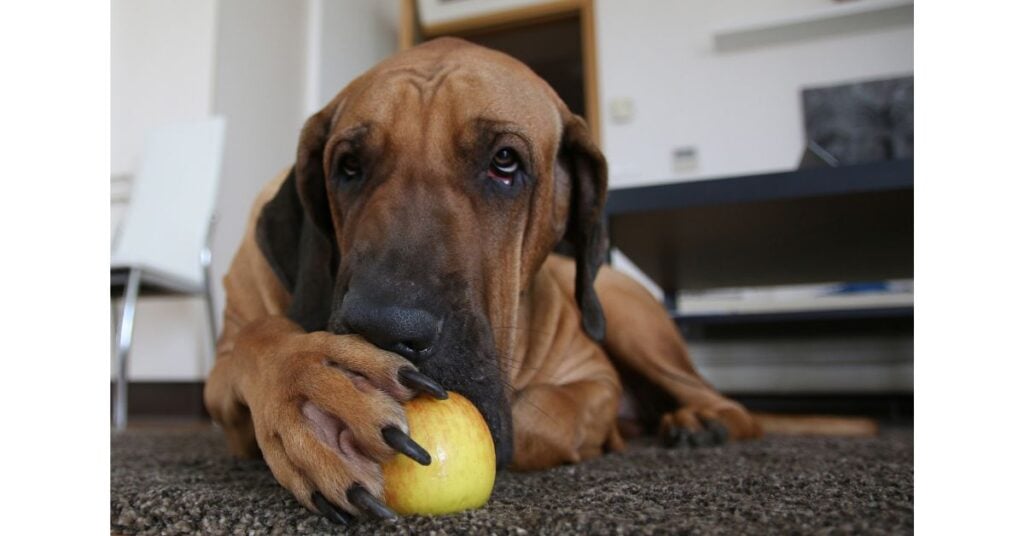
Most healthy dogs can have a few bite-size apple pieces, keeping all treats under about 10% of daily calories and avoiding the core and seeds.
Sharing a crisp apple with your dog feels simple, yet the right amount matters. Too little and you miss a handy, low-fat treat; too much and you risk stomach upset, extra calories, or trouble from the core and seeds. This guide shows safe apple portions, prep, and timing so you can offer this fruit with confidence.
Why Apples Appeal To Dogs
Many dogs love apples because the fruit is sweet, crunchy, and full of water. Apples offer vitamin A, vitamin C, and fiber while staying low in fat and protein, which suits many adult and senior dogs who need light snacks instead of heavy biscuits.
| Apple Part Or Trait | What It Offers Dogs | Safe Or Not? |
|---|---|---|
| Peeled Or Unpeeled Flesh | Water, fiber, vitamin A, vitamin C, mild sweetness | Safe in small portions |
| Peel | Extra fiber and plant compounds, more chew | Safe for most dogs if washed well |
| Seeds | Contain cyanogenic compounds, no benefit | Not safe; always remove |
| Core | Hard texture, dense seeds | Not safe due to choking and seeds |
| Stems And Leaves | Plant material, no real nutrition | Not safe; avoid offering |
| Fresh Raw Slices | Crunchy low-fat treat | Safe in bite-size pieces |
| Dehydrated Plain Pieces | More concentrated sugar and calories | Safe only in tiny amounts |
How Much Apple Can a Dog Eat? Safe Serving Breakdown
Veterinary nutrition guidelines often use a simple rule for snacks: all treats, including apple slices, should add up to no more than about 10% of your dog’s daily calories. PetMD guidance on apples for dogs follows this same idea and stresses that portions stay small and balanced against regular food.
The exact number of slices varies with your dog’s weight, age, and health. A toy dog may only need two or three very small cubes, while a large adult might handle several larger chunks along with other treats. You can use the table below as a starting point, then adjust based on how your dog feels and what your veterinarian suggests.
Basic Portion Guide By Size
The chart under this heading gives daily ranges for most healthy dogs, so you can match apple treats to body size at a glance.
Why The Seeds And Core Are A Problem
While apple flesh is widely considered safe, the plant parts around it deserve more caution. Apple seeds, stems, and leaves contain cyanogenic compounds, which can release small amounts of cyanide during chewing and digestion. ASPCA poison control data on apple plants lists these tissues as toxic for dogs, cats, and horses.
A few swallowed seeds from a dropped slice are unlikely to harm a healthy dog, yet there is no reason to offer them on purpose. The dense, hard core can also lodge in the throat or cause trouble lower in the gut. For that reason, always cut away the core, seeds, and attached stem before handing your dog a bite.
Safe Apple Portions For Dogs By Size
Portion control keeps this fruit in the treat zone, instead of turning it into a sugar and fiber overload. Start at the lower end of these ranges, especially when your dog tries apple for the first time, and watch for any hint of loose stool or gas afterward.
| Dog Weight Range | Approximate Apple Amount | Notes |
|---|---|---|
| Up To 10 Pounds | 2–3 small cubes or thin slices | Offer once a day at most |
| 10–25 Pounds | 3–5 small cubes or thin slices | Split into two short snack moments |
| 25–50 Pounds | 4–8 bite-size pieces | Mix with other treats through the week |
| 50–75 Pounds | 6–10 bite-size pieces | Keep total treats under 10% of calories |
| Over 75 Pounds | Up to one small apple, sliced, no core | Still keep overall treats modest |
| Puppies Of Any Size | 1–3 tiny pieces | Introduce slowly to protect delicate digestion |
| Sensitive Or Senior Dogs | 1–4 small pieces | Check with your vet about sugar and fiber limits |
How To Prepare Apple Safely For Your Dog
Good prep turns a basic apple into a safe, easy treat. Start with a fresh, ripe apple. Rinse it under running water to remove dirt or residue. Dry it, then place it on a cutting board.
Slice the apple into quarters, cut out the core and seeds from each section, and remove the stem. From there, trim the fruit into cubes or thin slices that match your dog’s mouth size. Tiny dogs do best with pieces no larger than a pea or corn kernel, while large dogs can handle half-moon slices as long as they still chew well.
Peel On Or Peel Off?
Most healthy dogs can enjoy apple peel, since it adds fiber and texture. That said, some dogs have sensitive stomachs or dislike the chew. If your dog has had loose stool after apple peel in the past, try offering peeled pieces instead. When you keep the peel, wash the apple thoroughly first.
Raw, Chilled, Or Frozen
Plain raw slices work well as quick rewards. Chilled slices from the fridge can feel refreshing on warm days or after a walk. Frozen apple cubes may soothe teething puppies or give adult dogs a longer lick-and-crunch treat, as long as the frozen pieces stay small enough to chew safely.
When Apples Are Not A Good Idea
Even when you follow basic rules for how much apple can a dog eat, some dogs do better without this fruit. Dogs with diabetes or weight issues often need tight control over sugar intake, so even natural fruit sugar might be too much. Dogs with chronic digestive problems can react poorly to extra fiber.
Skip apples or ask your veterinarian for clear advice if your dog has diabetes, frequent pancreatitis, long-term gut disease, food allergies, or is on a strict therapeutic diet. Also pause apple treats if you notice vomiting, loose stool, itch, or ear trouble around the time you use apple as a snack.
Allergy Or Intolerance Signs
True allergy to apple is rare, yet dogs can react to any new food. Watch for signs such as itching, hives, facial swelling, coughing, or trouble breathing soon after eating. Intolerance tends to show up as gas, bloating, or loose stool without skin or breathing changes. Either way, stop apple treats right away and contact a vet if signs feel severe or linger.
Smart Ways To Use Apple In Daily Treat Routines
Apple works best as part of a wider treat plan. Mix apple pieces with other dog-safe fruits and vegetables, such as blueberries, cucumber, or plain green beans, to spread out sugar. Use apple as a higher value snack during training, mixed with small bits of regular kibble so your dog stays focused without piling on calories.
You can also stuff a few small apple cubes into a sturdy food puzzle or chew toy, then top with a spoon of plain dog-safe yogurt. This slows down eating, adds mental effort, and keeps portions easy to track. For dogs prone to weight gain, swap one higher calorie biscuit a day for measured apple pieces so the total daily energy intake stays steady.
Putting It All Together
When you ask how much apple can a dog eat, the short guide is simple: stick to a few small pieces, keep all treats under roughly a tenth of daily calories, and never include the core, seeds, or leaves. Watch your dog’s stool, energy level, and skin after new snacks, and adjust portions or skip apples altogether if anything seems off.
Handled this way, apple can be a light, crunchy reward that adds variety to your dog’s snack list without crowding out complete dog food. Use the portion table as a starting point, listen to your dog’s body signals, and work with your veterinary team so apple treats stay safe and enjoyable over the long term.