
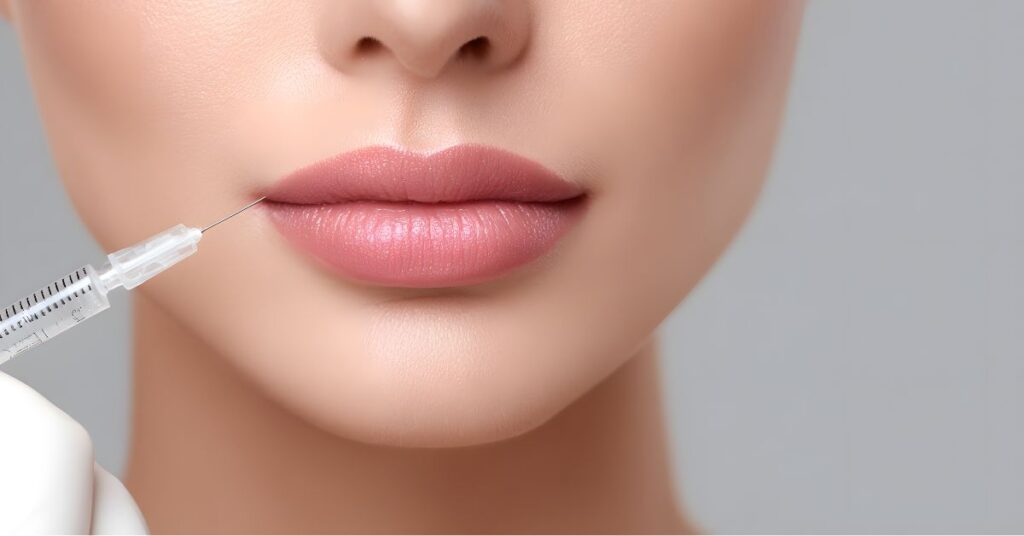
For a natural look with lip filler, most adults start with 0.5–1 mL, matched to lip size, shape, and ratio.
What “Natural” Lips Mean In Practice
Natural never means identical for everyone. It means lips that match your face, move freely, and keep a balanced upper-to-lower shape. In many faces, the lower lip carries a bit more height than the upper. A commonly used reference is an upper to lower ratio close to 1:1.6, not as a rule, but as a starting yardstick your injector can adjust for your features and background.
How Much Filler For Natural-Looking Lips: Real-World Ranges
Most first sessions land in a modest range. Thin lips do better with gentle steps, while medium lips can accept a touch more on day one. Staging keeps motion, shape, and softness intact.
Starter Ranges By Lip Type And Goal
The chart below gives a realistic map for session one. Your injector may adjust based on width, height, philtrum columns, and gum show when you smile.
| Starting Lip Type | Typical First Session (mL) | Why This Range |
|---|---|---|
| Extra Thin | 0.3–0.6 | Limited stretch; staged adds reduce over-projection and keep borders crisp. |
| Thin To Medium | 0.5–0.9 | Enough lift for body and definition without stiff feel. |
| Medium | 0.7–1.0 | Room for volume plus shape work in one visit. |
| Full | 0.3–0.7 | Aim at contour and balance, not size. |
| Mature Lips | 0.4–0.8 | Blend of structure at the border and soft fill for lines. |
Many people add a small top-up four to eight weeks later once swelling fades and movement looks settled.
Why Staged Dosing Keeps Results Soft
Lips have limited expansion. Packing in a large bolus can strain tissue and warp shape. A safer path is to add 0.5–1 mL per session, let things settle, then reassess. This keeps speech natural, keeps the smile from tilting, and protects blood flow in a busy vascular zone.
Shape, Ratio, And Placement That Read As Real
Balance beats raw size. Many injectors aim for a gentle curve of the Cupid’s bow, a soft roll at the vermilion border, and body in the middle third of each lip. The lower lip often ends a touch taller than the upper. When that proportion holds, even a 1 mL total can read as “born with it.”
Common Placement Moves
- Border refinement: tiny threads to define edges without a hard rim.
- Body fill: small droplets through the middle third for cushion and sheen.
- Pillars: light support along philtrum columns to lift the bow without inflating the center.
Product Choice Matters Less Than Technique
For softness and reversibility, hyaluronic acid gels are the mainstay. Brands vary in firmness and spread. Your injector will match gel behavior to your tissue: firmer for shape at the border, softer for body and glide. If a tweak is needed, hyaluronidase can dissolve HA gels, which adds a safety net.
Swelling Timeline And What You’ll See
By day three to five, lips settle. Final texture and shape readout lands near the two-week mark. A check at that point picks up small asymmetries or dryness and sets the plan for any touch-up.
Recovery At A Glance
| Time Point | What You See | Common Tips |
|---|---|---|
| 0–48 hours | Swelling, mild bruises, tender spots. | Cold packs, head-up sleep, arnica if cleared by your clinician. |
| 3–7 days | Volume settles; dryness may show. | Gentle balm, no firm lip massage unless told by your injector. |
| 2 weeks | Shape reads true; movement feels normal. | Review, plan micro-top-up if needed. |
How Long Results Last And When To Maintain
Most HA gels in lips hold for six to twelve months. High motion speeds up breakdown, so talkers and gym fans may sit at the shorter end. Small maintenance visits keep shape steady and prevent big swings in size.
Safety Basics You Should Expect From A Clinic
You want a licensed injector, sterile setup, and a plan for emergencies. Ask about product traceability, aspiration and mapping habits, and whether hyaluronidase is on hand. Skip DIY gadgets and non-medical venues. Your face has arteries that feed the skin and the eye; qualified care matters.
Needle Or Cannula? Pros And Trade-Offs
Needles place tiny dots with precision and can define the border cleanly. A cannula glides under the skin with fewer entry points and may bruise less. Many injectors switch between them: needle for edges, cannula for body. The tool is secondary to training and planning.
Cost, Syringe Math, And Value
Most syringes hold 1 mL. You might use half now and bank the rest for a planned top-up, if the clinic allows. Spreading spend across two light visits often yields a softer look than a large single pass.
Signs The Amount Was Too Much
Lips that look stiff at rest, a shelf under the nostrils, sharp ridges at the border, or a top lip that hides the teeth when you smile all hint at overfill. In these cases, a small dissolve session restores motion and shape, then you can rebuild with lighter doses.
Dose Scenarios You Can Picture With Your Injector
Every mouth moves differently. A soft talker with a short philtrum may only need a tiny lift at the bow and a touch in the center pads. A singer or teacher who moves the lips all day often prefers lighter passes across visits to keep softness. If your lower lip already has good body, the plan may aim at lift and gloss for the upper with border threads and a few droplets for cushion. If lipstick creeps past the edge, fine threads can seal it without bulk. If the center looks flat, two or three micro-droplets in the middle third restore light reflection. If the corners pinch inward, a dot near the commissure opens the smile without inflating the whole lip.
Who Should Wait Or Skip Lip Filler
Skip treatment during pregnancy or while nursing. Cold sore history calls for a plan with your clinician, since a flare can occur after injections. Active skin infection, active acne near the site, or any recent dental work are also reasons to push the visit. People with known allergies to ingredients in the gel or the enzyme used to dissolve HA should talk through options in detail.
Small Numbers, Big Payoff
It rarely takes more than a milliliter to move from flat to fresh. Half a milliliter can lift the bow, crisp the border, and soften vertical lines on the upper lip. Another half later adds body only if you want it. Chasing a large size jump in one sitting risks a stiff smile and odd shadows on the upper lip when you laugh.
Keeping The Result Year-Round
Book a check at four to six months. Many people need no product at that visit, only hydration coaching and a plan for the next quarter. By eight to twelve months, a light top-up brings back sheen and shape. Small, regular visits beat long gaps with big volumes. Skin care matters too: a bland balm, sun care, and a gentle retinoid around (not on) the lip line help the texture read smooth.
Red Flags And When To Call Fast
Most bruises fade in a few days. Call right away if you see patchy blanching, marbled color changes, severe pain, or any vision change. A trained clinic will have a playbook for urgent care, including use of hyaluronidase, warm compress, and a full exam. This is another reason to choose a medical setting over walk-in venues or at-home gadgets.
What Your Injector Weighs Before Dosing
Beyond lip size, your provider checks bite, tooth show, and gum show on a big smile. A gummy smile may call for a tiny dose to the lip elevator muscle instead of big volume in the upper lip. A flat philtrum may need pillar support before body fill. If you tend to chew or purse under stress, the plan may favor soft gels and slow steps to keep motion smooth.
Putting It All Together
If you want lips that pass as your own, think small steps. Start with a modest total, aim for clean borders and a gentle bow, and protect the lower-to-upper balance. Re-check at two weeks, then nudge with micro-doses as needed. That steady plan keeps movement, softness, and shape on point over the long run.
Method Notes And Sources
This guide draws on peer-reviewed data about dosing and lip ratios, plus public advisories on safety and care.
Helpful reads: FDA filler do’s and don’ts and Cleveland Clinic lip filler overview.