
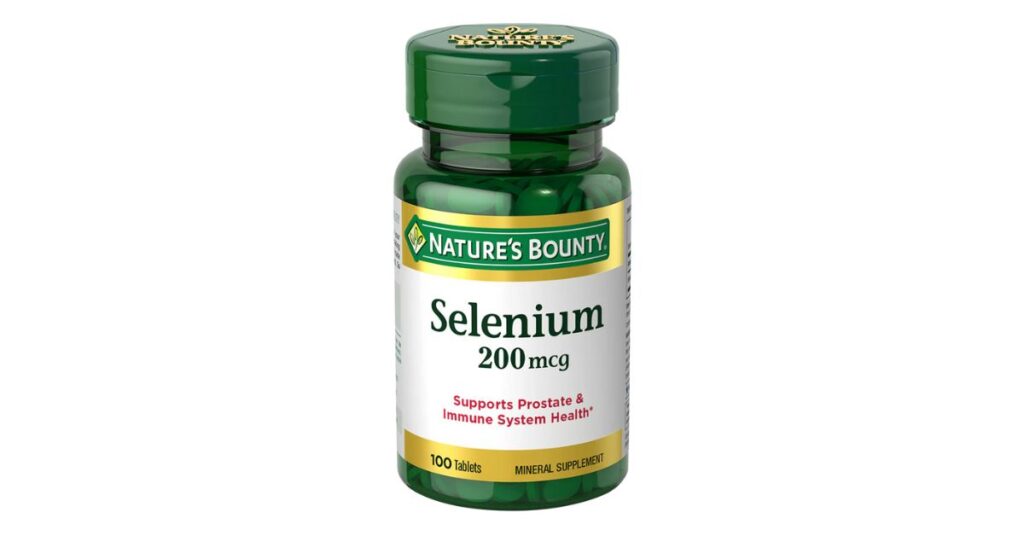
Most men need 55 mcg of selenium daily; 100–200 mcg short-term is often studied for semen health, and 400 mcg is the safe upper limit.
Selenium supports sperm formation, antioxidant defense, and testosterone pathways. The goal is to cover the baseline need from food, and only add a supplement if diet, labs, or a clinician’s plan calls for it. Below is a plain guide to daily amounts, food picks, and when a tablet makes sense.
Daily Needs And Safe Upper Limit
The standard target for adult men is 55 micrograms (mcg) per day. The tolerable upper intake level (UL) for adults is 400 mcg. Short runs of 100–200 mcg are common in research on semen quality, usually for 3–6 months. Going past the UL raises the chance of selenosis—hair and nail changes, a garlic breath odor, and gut upset. Stay under the cap unless a specialist directs a higher clinical dose.
| Item | Amount (mcg) | Notes |
|---|---|---|
| Daily target for adult men | 55 | Meet with food first when possible |
| Common supplement capsule | 50 | Low add-on; pairs well with a multivitamin |
| Research range for semen health | 100–200 | Used short-term in trials |
| Upper intake level (UL) | 400 | Do not exceed without medical direction |
| Brazil nut (one average) | 60–90 | Varies by soil; treat as a strong dose |
| 3 oz tuna (light, canned) | 60–70 | Food values vary by species and source |
| 2 eggs | 30–40 | Egg size and hen feed change the number |
How Much Selenium Per Day For Male Fertility? Facts And Safe Ranges
Most men asking how much selenium per day for male fertility want a number they can act on without risk. Here’s the plain view: meet the 55 mcg baseline from food, and only add a supplement if your diet runs light or your care team suggests a trial. When a supplement is used for semen quality, studies often sit at 100–200 mcg per day for a season, not forever. The cap remains 400 mcg from all sources.
Evidence on pregnancy rates is mixed. Some trials show gains when antioxidants are used, while others don’t move the needle. The strongest pattern is a nudge in semen parameters—motility, count, and DNA integrity—in men with low baseline diet quality or high oxidative stress. Results are not uniform, and dose, form, and the company of other nutrients all matter.
Food Sources Men Can Use First
Hitting 55 mcg is easy with smart picks. Fish, eggs, and meats supply steady amounts. A single Brazil nut can cover a day, yet the number swings a lot between batches. That’s why many dietitians treat it like a supplement in nut form—one kernel on some days, not a handful each night.
Sample Day Hitting 55 Mcg
Start with oatmeal and two eggs at breakfast. Add a cup of yogurt at lunch and a tuna sandwich or baked cod at dinner. That pattern clears the target without a pill. If you skip fish, mix in a small pork chop or chicken thigh during the week and keep eggs in rotation.
Smart Use Of Brazil Nuts
Brazil nuts can overshoot the mark fast. One nut might carry 60–90 mcg; another from a different grove can top 100 mcg. Treat them like potent add-ons. If you like them, plan one nut on a few days per week rather than a daily bowl.
Supplement Use: When, How, And What To Check
Who Might Add A Tablet
Men with very low diet intake, those on restrictive eating patterns, or those living in low-selenium soil regions may fall short. A simple multivitamin often carries 50 mcg, which tops up food nicely. If a care team suggests a focused run for semen quality, they often pick 100–200 mcg per day for a set window.
Pick A Form And Dose
Selenomethionine and selenium yeast are common forms with good absorption. Sodium selenite is also used. Keep total daily intake from food plus pills under 400 mcg. If a product lists 200 mcg per capsule, avoid doubling up unless a clinician asks you to.
Stacking With Other Nutrients
Many protocols pair selenium with vitamin E, zinc, carnitine, CoQ10, or folate. Some combinations help sperm movement or reduce oxidative stress markers. Results vary by person and baseline diet. Start simple and track one change at a time.
Safety, Meds, And Timing
Selenosis comes from chronic excess. Early signs include a metallic taste, garlic breath, brittle hair or nails, and stomach upset. Stop high-dose use and speak with your clinician if any of these appear. People on thyroid meds or with autoimmune thyroid issues should share supplement plans with their prescriber, since selenium interacts with thyroid pathways.
What The Research And Guidelines Say
Authoritative nutrition guidance sets the adult male target at 55 mcg and the adult UL at 400 mcg. A large review of antioxidant use in subfertile men found mixed outcomes on live birth and clinical pregnancy. The urology community notes that supplements may help semen measures in select cases, yet the overall impact on births remains uncertain. Read the details from the NIH selenium fact sheet and the AUA/ASRM male infertility guideline.
Deficiency, Excess, And Lab Clues
When Intake Is Too Low
True deficiency is uncommon in many countries, yet it can occur with long-term poor intake, certain gut conditions, or parenteral nutrition without trace elements. Signs can include fatigue and weaker antioxidant status. A clinician may check serum or plasma selenium, plus a thyroid panel when symptoms fit.
When Intake Is Too High
Chronic excess can lead to hair and nail changes, a skin rash, and nerve issues. Very high intakes over time can be harmful. Keep supplements steady and avoid stacking multivitamins with separate selenium capsules unless you’ve done the math.
Testing And Targets
Blood selenium roughly tracks intake. Some labs also offer glutathione peroxidase activity. If you use a supplement cycle, the check is typically done after 8–12 weeks to see if the dose aligns with the plan.
Typical Study Doses And Context
The table below sums common patterns seen in trials and clinic practice notes. These are not blanket prescriptions; they show the range that appears in the literature. Keep intake from all sources at or under 400 mcg unless your specialist directs a specific medical protocol.
| Dose (mcg/day) | Duration | Context |
|---|---|---|
| 55 | Ongoing | Meets daily requirement for adult men |
| 50 | Ongoing | Typical multivitamin add-on |
| 100 | 8–12 weeks | Used for semen parameter support |
| 150 | 12–24 weeks | Used in mixed antioxidant protocols |
| 200 | 12–26 weeks | Often paired with vitamin E in studies |
| 60–90 from Brazil nut | Occasional | One nut; varies widely by soil |
| >400 | Any | Above UL; avoid without medical direction |
Choosing Food Versus Pills
Food gives more than a single trace element. Fish brings omega-3s. Eggs carry choline. Yogurt adds protein and iodine. Those extras stack up for hormones and cell membranes that matter to sperm. A tablet can fill a gap, yet it can’t replace the whole plate.
Cost And Convenience
A 50–200 mcg capsule is cheap and simple. Food asks for planning. Pick the tool that fits your week. If work travel blocks cooking, a short run with a capsule can hold the line until you’re back in your routine.
Label And Quality Checks
Look for third-party testing seals and a clear ingredient list. If a brand lists a “proprietary blend,” skip it. You want the form and the dose in plain view. Many men do well with a basic selenomethionine product at 100 mcg when a trial is warranted.
Who Should Not Self-Dose High
Do not push past the UL on your own. Men with kidney disease, thyroid disorders, or those on blood thinners should clear any plan with a clinician. If you already take a multivitamin and eat selenium-rich foods, stacking a separate high-dose product may tip you over the line.
More On The Evidence
Large evidence reviews of antioxidants in male subfertility report mixed findings on live birth. Some meta-analyses show a small gain; others see no clear change when lower-quality studies are removed. Urology guidelines advise shared decision-making: supplements can be tried, yet expectations should stay modest and the plan should be time-boxed. See the Cochrane review on antioxidants and the AUA/ASRM guidance.
Putting It Together For Real Life
A Food-First Plan
Build most days around whole foods: fish a few times per week, eggs, yogurt, and lean meats. That pattern alone often reaches 55 mcg. If your intake still comes up short, a multivitamin with 50 mcg is a tidy fix.
A Short Supplement Cycle
If a clinician suggests a trial for semen quality, pick a clean label at 100–200 mcg. Take it with a meal, keep a simple routine, and set a stop date. Recheck after the cycle with your care team to see if the plan should continue, change, or pause.
Tracking What Matters
Along with intake, focus on sleep, exercise, heat exposure, and tobacco. These levers shape sperm health as much as any single micronutrient. When the basics are steady, a nutrition tweak has a better chance to help.
Quick Take
If you’re asking how much selenium per day for male fertility, the daily requirement is 55 mcg, with 100–200 mcg used short-term in some plans, and a hard cap at 400 mcg from food and supplements combined. Keep food at the core and add a tablet only when you have a clear reason.