
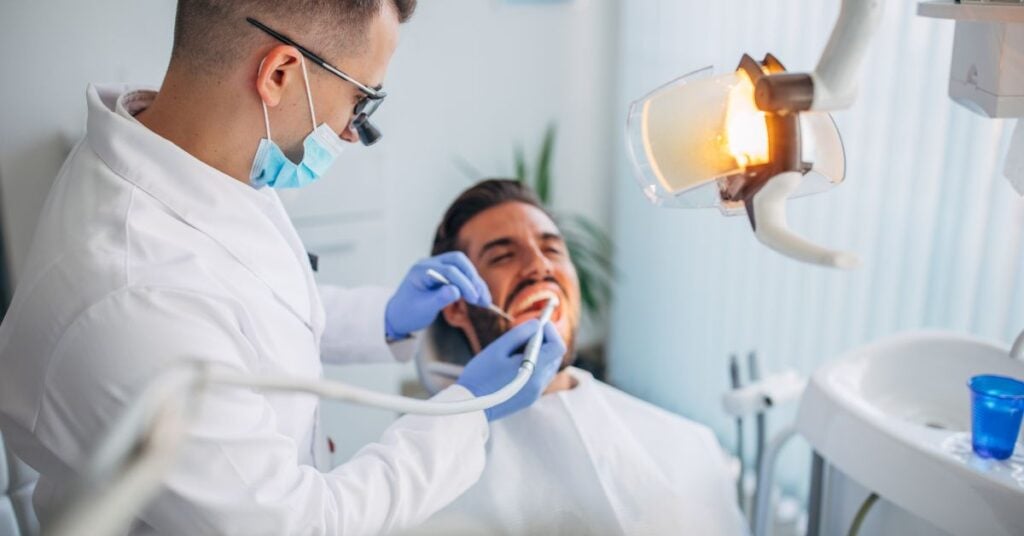
A deep cleaning at the dentist usually costs $150–$300 per quadrant, or $600–$1,600 for a full mouth before insurance.
If your dentist just recommended a deep dental cleaning, the next thought is often about the bill. Scaling and root planing helps stop gum disease before it causes tooth loss, but the price tag can still feel unclear until you see the numbers laid out.
Deep Cleaning Cost Overview Table
| Scenario | Typical Cost Range (USD) | What This Usually Includes |
|---|---|---|
| Per quadrant without insurance | $150–$350 | Scaling and root planing in one quarter of the mouth |
| Full mouth (4 quadrants) without insurance | $600–$1,400 | Deep cleaning of all quadrants over one or more visits |
| Per quadrant with typical insurance | $75–$200 | Plan often pays around half after deductible |
| Full mouth with typical insurance | $300–$900 | Patient share after coinsurance and deductible |
| Initial exam and periodontal charting | $50–$200 | Dental exam, gum measurements, and diagnosis records |
| X-rays for periodontal diagnosis | $25–$150 | Panoramic or bitewing images to measure bone loss |
| Local anesthetic per visit | $25–$150 | Injection or numbing for patient comfort |
| Medication in deep pockets | $30–$90 per tooth | Locally placed antibiotics when the dentist recommends them |
How Much Should A Deep Cleaning At The Dentist Cost? Average Ranges
When patients ask how much should a deep cleaning at the dentist cost?, they usually want a ballpark number they can work with while planning. Most recent surveys from dental practices in the United States place scaling and root planing between about $150 and $350 per quadrant without insurance, with many offices sitting near the middle of that range.
That means a full mouth deep cleaning often lands somewhere between $600 and $1,600 before insurance adjustments. Some urban clinics and periodontal specialists may charge more, while small practices in areas with lower overhead can post lower fees.
What A Deep Dental Cleaning Includes
Deep cleaning is the everyday term most offices use for periodontal scaling and root planing. The American Dental Association describes this treatment as cleaning below the gum line to remove plaque and tartar and smoothing the root surface so the gums can heal and reattach.
In practical terms, here is what usually happens:
- The dentist or hygienist measures the spaces between your teeth and gums.
- X-rays may be taken to check bone levels and detect tartar below the gums.
- Local numbing is placed so you stay comfortable during treatment.
- Hand tools and ultrasonic tips remove hardened deposits on the roots.
- The root surfaces are smoothed so plaque is less likely to stick again.
This level of cleaning takes more time than a standard checkup visit, which is why deep cleaning has a separate fee structure from regular prophylaxis.
Deep Cleaning At The Dentist Cost Breakdown By Factor
Even when two patients need scaling and root planing, their deep cleaning cost can look very different. Several pieces come together to shape your quote.
Location And Type Of Provider
Dental fees reflect local living costs, rent, and staff wages. Big cities and coastal areas tend to sit at the higher end of price ranges, while rural regions often list lower fees per quadrant. A specialist in periodontics may charge more than a general dentist, especially when advanced gum disease needs extra skill and chair time.
Gum Disease Severity And Treatment Time
If pockets are only slightly deeper than normal and tartar buildup is modest, your hygienist may be able to clean a full mouth in one appointment. When periodontitis is advanced and deposits are heavy, the office may need to spread treatment across two or more visits. More teeth, deeper pockets, and longer chair time all push the fee higher.
Extras That Add To The Bill
Several common items can add to the basic deep cleaning charge:
- Local anesthetic, especially when extra carpules are needed for comfort.
- Topical numbing gels for very sensitive areas.
- Antibiotic gels or chips placed in pockets after cleaning.
- Additional X-rays when the dentist monitors bone changes closely.
- Re-evaluation visits a few weeks after treatment to check healing.
When you receive an estimate, ask the office staff to separate these items so you can see exactly what deep cleaning itself costs and what comes from extra services.
How Insurance Changes Deep Cleaning Cost
Dental insurance can soften the cost of scaling and root planing, but coverage rules can be confusing until someone walks you through your benefits. Many plans cover periodontal treatment at around 50 percent once the deductible is met, up to an annual maximum.
Insurers often rely on clear diagnosis records before they agree to pay. Resources such as Humana’s overview of scaling and root planing costs and guidance from the American Dental Association show that many plans look for evidence of bone loss and pockets over a certain depth on the chart and X-rays before they approve payment.
Because every plan writes its own rules, the same procedure can be covered fully in one office visit and only partly covered in another clinic across town. The only reliable way to know your share is to ask the office to send a pre-treatment estimate or to call your plan while you are still in the chair.
Sample Deep Cleaning Cost Scenarios
The numbers below show how different pieces change what you pay out of pocket. These are general illustrations, not quotes.
| Situation | Provider Charge | Approximate Patient Share |
|---|---|---|
| No insurance, one quadrant | $225 | $225 (paid at visit) |
| No insurance, full mouth (4 quadrants) | $1,000 | $1,000, often split across two visits |
| 50% coverage, deductible already met | $900 total | About $450 after plan payment |
| 80% coverage on periodontal care | $800 total | About $160 per visit for two visits |
| Out-of-network provider, 50% coverage | $1,100 total | $550 plus any amount above plan allowance |
| High deductible plan, deductible not met | $950 total | Patient pays full amount until deductible is reached |
| In-network provider with payment plan | $900 total | Split into monthly payments arranged with the office |
How To Check Your Own Deep Cleaning Quote
To figure out whether your estimate matches usual deep cleaning cost ranges, break the process into a few simple steps.
Confirm The Diagnosis
Start by asking which areas of your mouth need treatment and why. The dentist can show you your gum chart, point out pocket depths, and compare those readings with healthy numbers. Understanding whether one quadrant or all four need deep cleaning helps you make sense of the base fee.
Ask For Itemized Codes
Every billed service carries a code. Ask the front desk for a printed estimate that lists the codes for scaling and root planing, X-rays, exams, anesthesia, and any planned medications. That makes it easier to compare quotes between offices and to ask your plan for coverage details.
Call Your Dental Plan With The Estimate
Once you have the codes and dollar amounts, call the member services number on your dental card while the estimate is in front of you. Ask what percentage the plan pays for each code, whether your deductible applies, and how close you are to your annual maximum. Write those numbers down so you can compare them with the estimate from the office.
Talk Through Payment Options
If the quote still feels hard to manage, ask the office whether they offer payment plans, in-house membership discounts, or third-party financing. Many clinics work with patients so needed periodontal care does not keep getting delayed year after year.
Saving Money On Deep Cleaning Safely
There are ways to lower the bill for scaling and root planing without cutting corners on care. The goal is to keep needed treatment within reach while still working with qualified dental teams.
Use In-Network Providers When Possible
If you carry dental insurance, checking the in-network list can trim your share for deep cleaning. In-network dentists agree to accept the plan’s allowed fee, which means your coinsurance percentage is based on a lower starting number. Out-of-network providers may bill above that figure and leave you with the difference.
Ask About Membership Plans Or Cash Discounts
Many offices now offer in-house membership plans for patients without insurance. These programs usually charge an annual fee in exchange for set pricing on exams and cleanings and a discount on periodontal treatment. Some clinics also give a small discount when patients pay in full with cash or debit at the time of service.
Consider Dental Schools Or Hygiene Programs
Teaching clinics at dental schools and college hygiene programs often provide deep cleaning at lower fees. Students perform treatment while licensed dentists and hygienists supervise every step. Visits may take longer, but the savings can be substantial for patients on tight budgets.
When Deep Cleaning Cost Is Worth It
Gum disease rarely improves on its own. Once tartar builds below the gum line and pockets deepen, regular cleanings and home care are no longer enough. Deep cleaning removes the deposits that keep the gums inflamed and gives your body a chance to heal.
Left untreated, periodontitis can lead to chronic bleeding, bad breath, loose teeth, and bone loss that eventually means extractions and partial dentures. Those treatments often cost far more than scaling and root planing completed early.
If you have been wondering how much should a deep cleaning at the dentist cost?, use these ranges as a rough guide and ask your dentist for an itemized estimate. Clear numbers on paper make it easier to go ahead with care that protects your teeth and gums.