
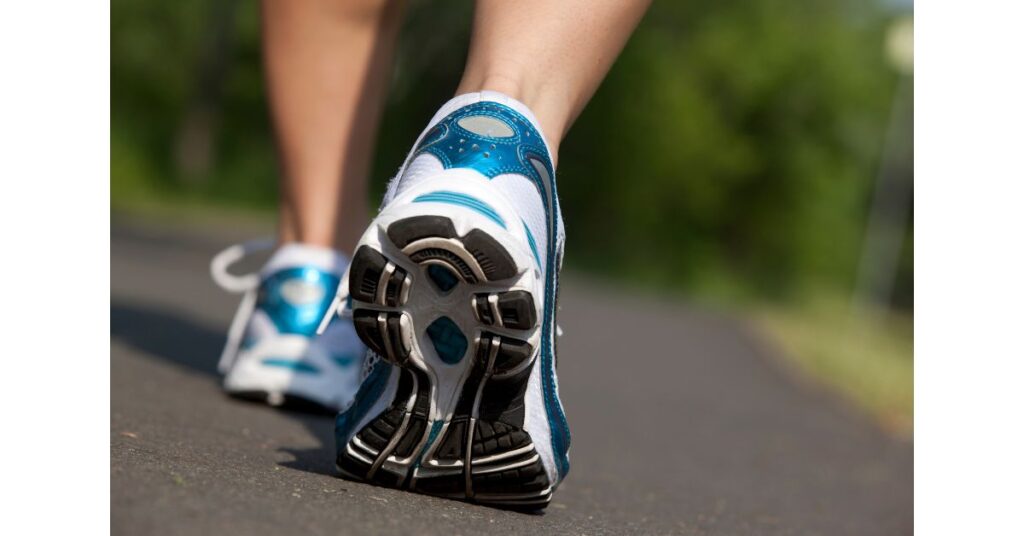
For weight loss, walk 7,000–10,000 steps (about 60–90 minutes) most days and pair it with a steady calorie deficit.
Weight loss comes from a steady calorie gap. Walking helps create that gap while being easy on joints and simple to stick with. This guide gives you clear step targets, time ranges, and pace tips so you can plan walks that move the scale.
How Much Should I Walk A Day To Lose Weight? Science-Backed Targets
You will see progress when you hit enough weekly walking time and keep food intake a bit below your burn. A simple target that works for many adults is 60–90 minutes of brisk walking on most days. That usually lands between 7,000 and 10,000 steps per day, depending on stride and terrain.
Two levers drive results: total minutes and intensity. A brisk pace (around 3–4 mph) raises energy use per minute compared with a casual stroll. Short walks after meals add up fast and help with appetite control.
Early Planner: Steps, Time, And Burn At A Glance
The table below uses a 155 lb (70 kg) walker at a brisk pace of ~3.5 mph. Use it to choose a daily step goal that fits your schedule. Numbers are estimates, not a medical prescription.
| Daily Steps | Time At Brisk Pace | Estimated Calories |
|---|---|---|
| 3,000 | ~26 min | ~135 kcal |
| 5,000 | ~43 min | ~225 kcal |
| 7,500 | ~64 min | ~340 kcal |
| 10,000 | ~86 min | ~455 kcal |
| 12,000 | ~103 min | ~545 kcal |
| 15,000 | ~129 min | ~680 kcal |
| 20,000 | ~171 min | ~905 kcal |
How Much Walking Per Day To Lose Weight — By Goals And Schedules
Pick the approach that matches your life right now. Any plan works better when it’s repeatable.
Busy Day, Short Blocks
Stack three 20–30 minute brisk walks. One before work, one at lunch, one in the evening. This hits 60–90 minutes without a long block.
One-And-Done Session
Walk 60–75 minutes at a steady pace. Add five short surges where you push the pace for 1 minute, then ease back for 2 minutes. The surges raise your total burn.
Active Job, Lower Steps
If your workday already gives you 5,000 steps, add one 30–40 minute brisk walk to reach 8,000–10,000 steps. That extra block is often the difference between maintenance and loss.
Evidence You Can Use
Moderate intensity starts around the point where you can talk but not sing. The CDC talk test places brisk walking in that range, roughly 3–4 mph for most adults. Researchers classify activity with MET values; brisk walking is about 4–5 METs in standard tables, which lines up with the pace most people call “purposeful.”
Calories burned per minute rise with both MET level and body weight. That is why step goals feel tougher but also pay off more for heavier walkers. For planning, you can use a free calculator like the NIDDK Body Weight Planner to set calorie targets and walking time that fit your weight and goal date.
Adjusting For Body Size And Fitness
Larger bodies burn more calories at the same pace, so fewer minutes may reach the same total burn. Smaller bodies need extra minutes or a slightly quicker cadence to match the total. New walkers can start with 10–15 minute bouts, three to four times a day, then extend each bout by 2–5 minutes each week.
Fitness matters too. As your pace climbs, each minute counts more. A shift from 3.0 mph to 3.5 mph can add dozens of calories across a session. On days when pace drops, add a few minutes to keep the total energy use steady. Heat, wind, and hills change the math; trust the effort, not just the watch.
How To Set A Calorie Target That Matches Your Steps
Walking alone can move the scale, yet pairing it with a modest calorie deficit speeds things up. Many guidelines use a daily deficit of 300–500 calories as a steady, realistic range. That might come from a mix of extra walking and simple food swaps.
Quick Math That Works In Real Life
At 155 lb, a 30 minute brisk walk burns about 150–160 calories. Two of those walks plus a 200 calorie food cut gets you near a 500 calorie daily gap. Keep that pace and you stack a weekly loss trend while still eating full meals.
Form, Pace, And Surges
Walk tall, eyes up, shoulders loose. Let your arms swing close to 90 degrees at the elbow. Aim for a cadence that lets you speak in short phrases. If you can recite long lines easily, pick up the pace. If breath gets ragged, ease back.
What Counts As Brisk
For many, brisk lands around 3–3.5 mph on level ground. That’s 17–20 minutes per mile. On hills or in heat, the same effort will slow the clock, and that’s fine. Effort drives energy use more than speed alone.
Use Mini Surges
Add short pushes on flat stretches. Try 1 minute fast, 2 minutes steady, repeated 5–8 times. Surges raise heart rate, keep walks interesting, and make plateaus less likely.
Weekly Templates You Can Copy
These sample weeks match common step counts. Swap days to fit your life. Rest days are active: light stretching, easy strolls, chores.
7,000–8,000 Steps Most Days
- Mon: 30 min brisk + 10 min easy cool-down
- Tue: Two 20 min brisk sessions
- Wed: 45 min steady walk
- Thu: Restorative stroll 20 min
- Fri: 30 min brisk with 4 surges
- Sat: 60 min mixed terrain
- Sun: Restorative stroll 20–30 min
9,000–10,000 Steps Most Days
- Mon: 45 min brisk with 6 surges
- Tue: 30 min brisk + 15 min easy
- Wed: 60 min steady, flat
- Thu: Restorative stroll 30 min
- Fri: Two 25 min brisk sessions
- Sat: 75 min trail walk
- Sun: Rest day or gentle 20 min
12,000+ Steps Most Days
- Mon: 60 min brisk with 8 surges
- Tue: 45 min steady + hill repeats x6
- Wed: 75 min mixed terrain
- Thu: Restorative stroll 30 min
- Fri: 45 min brisk + 15 min easy
- Sat: 90 min long walk
- Sun: Rest day or yoga-style mobility 20 min
Safety, Shoes, And Surfaces
Pick shoes with a snug heel, room at the toes, and cushioning that matches your body weight. Rotate pairs if you walk daily. Replace shoes when the tread flattens or the midsole feels dead. On surfaces, mix soft trails and firm sidewalks to balance joint load and speed.
Hydrate before long sessions, sip during hot days, and add a pinch of salt on routes over an hour. If you take meds or have a health condition, check with your clinician before big changes. Any red-flag symptoms mid-walk — chest pain, odd dizziness, calf pain that won’t settle — call it and get checked.
Plateaus And How To Break Them
Weight loss rarely follows a straight line. Water shifts can hide fat loss for a week or two. If the trend stalls for three weeks, change one dial at a time. Bump daily steps by 2,000, add two short surge blocks per week, trim snacks by 150–200 calories, or add light strength work twice a week.
Second Look: Pace, Weight, And 30-Minute Burn
This chart shows how body weight changes the burn for a 30 minute walk. Use it to tune goals without guessing.
| Body Weight | Moderate (3.0 mph) | Brisk (3.5 mph) |
|---|---|---|
| 120 lb | ~100 kcal | ~123 kcal |
| 150 lb | ~125 kcal | ~154 kcal |
| 180 lb | ~150 kcal | ~184 kcal |
| 210 lb | ~175 kcal | ~215 kcal |
| 240 lb | ~200 kcal | ~246 kcal |
| 270 lb | ~225 kcal | ~276 kcal |
| 300 lb | ~250 kcal | ~307 kcal |
Tracking That Actually Helps
Pick one main metric for daily use. Steps are simple and work well for most walkers. Time on feet is great if your stride varies or you walk hills. Pace is useful once you’ve built a base.
Make The Numbers Work For You
- Set a floor, not just a ceiling. A 6,000 step floor keeps streaks alive on busy days.
- Use anchors: a 10 minute walk after each meal adds 30 minutes with little planning.
- Bank wins: hit a higher day when the schedule is open, then glide the next day.
Common Mistakes That Slow Progress
Only Chasing Distance
Two miles at a lazy pace won’t match one mile at a brisk effort. If time is tight, pick effort over distance.
Skipping Strength Work
Two short sessions a week — squats to a chair, wall pushups, band pulls — build muscle, support joints, and bump resting burn.
All Or Nothing Thinking
Missed your long walk? Stack three 10 minute strolls and keep the week on track. Consistency beats hero days.
Putting It All Together
Here’s a simple script you can keep: start with 7,000–8,000 steps per day for two weeks, mostly brisk. If weight is not trending down by week three, raise to 9,000–10,000 steps and trim 150–200 calories from snacks. If you enjoy longer outings, keep one 75–90 minute walk on the weekend. Recheck shoes every 400–500 miles and adjust routes for weather and daylight.
The phrase “how much should i walk a day to lose weight?” shows up a lot in search boxes. The real answer is steady walking most days, effort you can hold, and a mild calorie gap you can live with. When those pieces line up, the scale follows.
Many readers ask the same thing out loud: how much should i walk a day to lose weight? Use the tables, pick a weekly template, and give it two weeks. The plan will start to show results, then you can tweak minutes, steps, or surges to keep progress moving.