
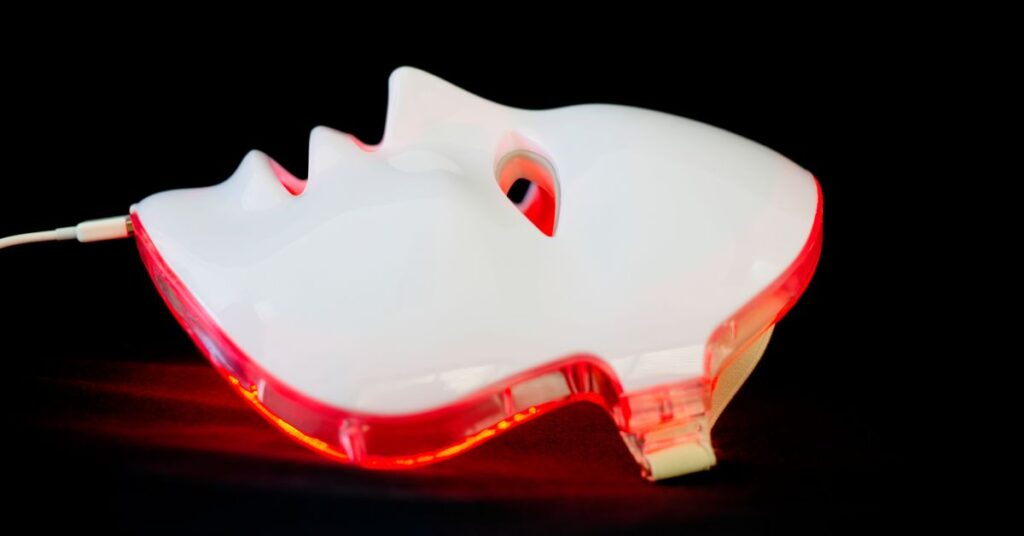
Yes, red light therapy for acne works best in short sessions—about 10–20 minutes, 3–5 times weekly for 4–8 weeks—then 1–2 times weekly to maintain results.
Red light therapy for acne needs steady, measured use, not marathon sessions. The aim is simple: calm inflammation, help the skin repair, and keep breakouts from roaring back. This guide gives clear dose and timing ranges you can use with at-home LED masks, panels, and in-office treatments. You’ll also see when to ease off, when to pause, and how to pair red with blue light without overdoing it.
Using Red Light Therapy For Acne: How Much And How Often
How much should you use red light therapy for acne? For most home devices, a practical starting plan is 10–20 minutes per session, 3–5 times each week, for 4–8 weeks. Then shift to 1–2 sessions weekly as maintenance. In clinics, visible-light sessions often run in short bursts over several weeks. These patterns match research where red (around 633 nm) and blue light were given in brief, repeated exposures with rest days in between.
Quick Planner: Session Length And Weekly Dose
| Scenario | Session Length | Frequency |
|---|---|---|
| Home LED Mask Or Panel, Mild Breakouts | 10–15 minutes | 3–4 days each week |
| Home LED, Moderate Inflammatory Acne | 15–20 minutes | 4–5 days each week |
| Home Handheld Wand (Small Coverage) | 10 minutes per face zone | 3–5 days each week |
| Clinic LED (Visible Light) | ~20 minutes | 2 sessions per week for 4 weeks |
| Red + Blue LED At Home | 10–20 minutes total | 3–5 days each week |
| Maintenance After Clearer Skin | 10–15 minutes | 1–2 days each week |
| Flare Week | Keep prior session length | Add 1 extra day, then reassess |
This table is a starting grid, not a rigid rulebook. Device output, acne type, and skin response matter. If your device lists dose in J/cm², aim for light, repeated exposure rather than a single heavy hit.
Why Short, Steady Sessions Matter
Light works by triggering small signals in the skin. Red wavelengths sink a bit deeper than blue, easing swelling and helping repair. The effect builds with repetition, which is why frequent, shorter exposures make more sense than a rare long blast. In a well-known visible-light trial, people received two sessions per week for four weeks, alternating blue and red for about twenty minutes per session with rest days in between. Dose was measured, sessions were limited, and results moved in the right direction over the month.
Clinic plans often mirror this cadence. Reviews of light-based acne care describe treatment blocks across several weeks, not daily marathons. For the home user, the same idea applies: stay consistent, take rest days, and adjust based on what your skin shows you in the mirror.
Make The Most Of Your Device
Pick A Sensible Starting Dose
If the manual gives a dose number, check whether it’s energy per area (J/cm²) or power (mW/cm²). Many masks target a red band near 630–660 nm; some add near-infrared. Start at the lower end of the time window, then move up as your skin allows. Stop a session if you feel heat or stinging.
Stick To Regular Cadence
Pick three to five set days, mark them on a calendar, and use the same time window each day. Consistency beats intensity. A burst of daily sessions for a week rarely outperforms a steady four-week plan.
Pair Red With Blue Light Wisely
Blue light targets acne bacteria near the surface while red tempers swelling a bit deeper. Many devices alternate or combine both. If your mask cycles colors, keep the total session at 10–20 minutes. If you have separate lights, you can split the time, such as 10 minutes blue and 10 minutes red, on the same day or alternate days.
What Dermatology Sources Say
Patient pages from leading groups state that visible light can help with pimples, with clinic tools stronger than home models. They also point out limits: visible light does not clear blackheads, whiteheads, nodules, or cysts on its own. Trials that used red and blue light often ran eight sessions across four weeks, about twenty minutes at a time, with measured dose and cooling rest days. An evidence review rates the certainty as low across many trials, a cue to keep expectations grounded while you keep proven topicals in the mix.
When To Expect Changes
Most users notice calmer, less angry spots first, then a drop in new inflamed bumps. Give the plan at least four weeks. Many clinic protocols reassess at week four and again at week eight. If inflamed lesions are still marching on, it’s time to see a dermatologist to add proven topicals or oral care while keeping light as a helper.
Safety First: Simple Rules You Can Live With
Protect Eyes
Use the goggles that came with the device. Red LEDs don’t emit UV, but your eyes still deserve shade during bright, close exposure.
Skip Photosensitizing Days
Certain medicines and topicals raise light sensitivity. Common examples include doxycycline, minocycline, and high-dose retinoids. Many peels and leave-on acids do the same. Pause light on those days and restart once the product cycle ends. If you’re on isotretinoin, ask your dermatologist about light timing and type before you begin.
Mind Active Rashes Or Fresh Procedures
Don’t shine a bright panel over an angry rash, fresh peel, or open wound. Wait for the skin to settle, then restart at the low end of the timing range.
Use Clean Skin And Sensible Distance
Wash, pat dry, and keep makeup off during sessions. Follow the device’s distance guide so the LEDs sit in their working range.
Sample Weekly Schedules
Home Mask (Mild Inflammatory Acne)
Monday, Wednesday, Friday: 12 minutes total. After week two, bump to 15 minutes if skin stays calm. Hold this for two more weeks. Then shift to 12 minutes once or twice weekly.
Home Panel (Moderate Breakouts)
Monday, Tuesday, Thursday, Saturday: 15–20 minutes total. Keep rest days in between. After week four, hold at 1–2 sessions per week for maintenance.
Clinic LED Block
Week 1–4: Two sessions per week, about twenty minutes each, with red and/or blue visible light, spaced three days apart. Reassess at week four. Extend if needed.
How Much Should You Use Red Light Therapy For Acne? Timing Recap
Here’s the short path: 10–20 minutes per session, 3–5 days per week, for 4–8 weeks, then 1–2 days per week to hold gains. Keep rest days, wear eye shields, and time strong actives away from light. If you have a clinic nearby, ask about a four-week visible-light block with sessions spaced by several days.
Dosage Details For The Curious
Researchers often describe dose as total energy per area. One frequently cited acne trial alternated blue 415 nm and red 633 nm at about twenty minutes per session, with a red dose near 96 J/cm². Reviews show clinic plans clustering around short, repeated exposures across a four-week block. Home devices use lower power, so they reach a similar effect by asking for more sessions per week. That’s why a steady 3–5 day cadence is the sweet spot for most masks and panels.
| Protocol Element | Typical Range | What It Means |
|---|---|---|
| Wavelengths | Red ~630–660 nm; Blue ~415 nm | Red calms swelling; blue hits acne bacteria |
| Per-Session Time | 10–20 minutes | Short, repeatable exposure |
| Weekly Frequency | 3–5 sessions (home); 2 sessions (clinic) | Builds effect while leaving rest days |
| Block Length | 4–8 weeks | Enough time to judge change |
| Maintenance | 1–2 sessions weekly | Keeps gains without overload |
| Energy (Study Example) | ~96 J/cm² red in 20 min | Measured dose in clinic trial |
Device makers vary in power output and beam spread. If your manual lists a shorter time, follow that. If it lists longer, split the total across more days rather than doing one long stint.
Pairing Light With A Solid Acne Routine
Keep The Basics
Stick with a gentle, fragrance-free cleanser and a non-comedogenic moisturizer. A thin layer of benzoyl peroxide or a retinoid at night can stay in the plan, but avoid layering strong actives right before a light session.
Time Your Actives
Use leave-on acids or retinoids away from light time. Many people do light in the morning on clean, dry skin, and actives at night. That split keeps irritation down.
Sun Sense
Red LEDs don’t tan skin, but clear days still need sunscreen. Pick a broad-spectrum SPF 30 or higher and reapply when you’re outside.
When To Pause Or Call Your Dermatologist
Stop and seek care if you get eye pain, flashing lights, sudden headache, swelling that spreads, or a new, strange rash after sessions. Skip light over moles that are changing, or over any lesion your doctor has flagged for review. People with seizure disorders or a strong light sensitivity should get a green light from a clinician before starting any LED plan.
Answers To Common Dose Questions
Can I Use Red Light Daily?
Short daily sessions are safe for many, but you may not gain more than with 3–5 days each week. Try four weeks at four days per week first. If you still want daily use, go short—around ten minutes—and reassess skin feel and look every few days.
How Long Until I See Results?
Many users see calmer, less raised bumps by week two and clearer cheeks by week four. Severe nodules need medical care; light is not enough for those.
Do I Need Both Red And Blue?
Red helps with swelling and recovery; blue targets bacteria. Many masks combine them because acne has more than one driver. If your device has only red, you can still see gains in redness and healing while you keep a proven topical in the plan.
References You Can Trust
Scan the American Academy of Dermatology’s page on lasers and lights for acne for plain-language scope and limits. For a research snapshot, the Cochrane review of light therapies for acne summarizes trial designs and certainty of evidence; find it under light therapies for acne.