
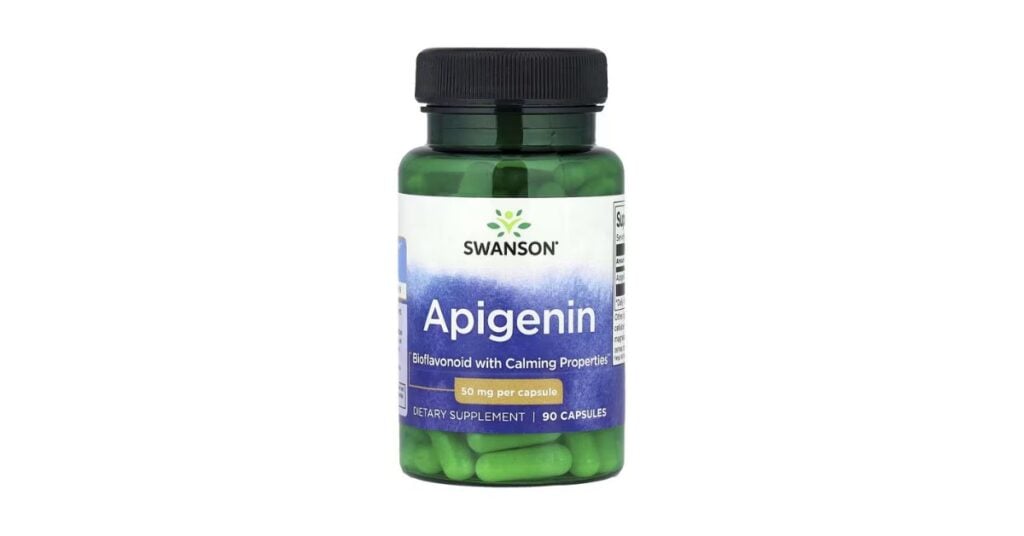
How much apigenin per day? There’s no official target, so food intake is fine for most, while many supplement labels sit at 25–100 mg daily.
Apigenin is a flavone that shows up in everyday plants like parsley, celery, and chamomile. It’s one reason chamomile tea gets linked with bedtime routines. You’ll also see apigenin sold as a standalone capsule or as part of a “sleep stack.”
If you’re here, you want a clean number. The honest answer is that apigenin doesn’t have a recommended daily allowance, and human dosing research is still thin. So the practical move is to anchor your choice to three things: where your apigenin comes from (food vs capsule), what you’re taking it for, and what else is in your mix (meds, herbs, alcohol, caffeine, and similar).
Apigenin Amounts In Food And Tea
Food-based apigenin is usually low per serving, with a few standout herbs that can add more in a small scoop. These numbers swing based on variety, growing conditions, and how the food is prepared. Use them as ballpark figures, not lab results.
| Source | Ballpark Apigenin | Practical Note |
|---|---|---|
| Fresh parsley (10 g) | 10–25 mg | Most dense “normal food” option; easy to add to meals. |
| Fresh parsley (100 g) | 150–250 mg | That’s a big bowl; most people won’t eat this much daily. |
| Celery (100 g) | 2–6 mg | Steady, modest contributor in salads and snacks. |
| Chamomile tea (1 cup) | 1–5 mg | Steep time and brand change the number a lot. |
| Dried chamomile flowers (2 g) | 10–20 mg | That’s the herb itself, not what fully transfers into tea. |
| Onion (70 g) | 3–7 mg | Ranges swing by type and prep. |
| Artichoke (1 medium) | 3–8 mg | Good food option if you already eat it often. |
| Mint (5 g) | 0.5–1 mg | Small boost in teas and salads. |
| Citrus (100 g) | 2–5 mg | Often more relevant as a pattern than a single serving. |
Takeaway: a herb-heavy diet can land in the single-digit milligram range on many days. A capsule can jump that fast, so the dose matters once you move past food.
How Much Apigenin per Day? Dose Ranges That Make Sense
Since there’s no official daily target, you’re choosing a range that fits your goal and comfort level. Most retail apigenin capsules are sold in the tens of milligrams.
Common daily ranges people use
- Food-only: 1–15 mg on many days, with higher days if you use lots of parsley or dried chamomile.
- “Light” supplement dose: 25 mg a day, often picked by people testing tolerance.
- Middle-of-the-road supplement dose: 50 mg a day, a common capsule size.
- Higher supplement dose: 100 mg a day, usually chosen for a short run, not as a forever habit.
Those ranges are not a promise of benefit. They’re a way to map the shelf options onto a sensible ladder: start low, watch your body’s signals, then decide if you even need more. Some people also cycle it during weekdays.
Why starting low is smart
Apigenin is linked with relaxing effects in some people. If you combine it with other sedating items—alcohol, sleep meds, antihistamines, melatonin, kava, valerian—you can end up groggy or off-balance. A lower first dose makes it easier to spot what’s doing what.
Daily Apigenin Dose By Goal And Form
Your goal shapes the form that makes sense. Tea feels gentle and easy to quit. A capsule gives a repeatable number. A chamomile extract can land in between, since the label might list total extract weight, not pure apigenin.
For evening wind-down
Many people start with chamomile tea, then step up only if they want a stronger, more repeatable effect. If you use a capsule, a common pattern is 25–50 mg taken with your last meal or a small snack. Taking it on an empty stomach can feel stronger for some people.
For a food-first routine
If you want to skip pills, build a week pattern: parsley on eggs, salads, soups, and sauces; celery and citrus as snacks; chamomile tea on nights when you want it. The table above makes it clear: herbs do the heavy lifting.
For “stack” users
If you already take magnesium, glycine, L-theanine, or a sleep blend, treat apigenin as one knob, not the whole system. Start at 25 mg. Don’t change three products at once. Keep a short log so you can tell what improved and what got worse.
Safety Checks Before You Pick A Number
This topic sits in the health lane, so a cautious approach pays off. Apigenin is in foods, yet a concentrated capsule changes the story. These checks help you avoid the most common “oops” moments.
Medication and condition flags
- Blood thinners and bleeding risk: If you take anticoagulants or have a bleeding disorder, talk with your doctor before using concentrated flavonoid capsules.
- Sedation and driving: If apigenin makes you drowsy, keep it for nights when you’re not driving after dosing.
- Allergy history: Chamomile is in the daisy family. If you react to ragweed or related plants, start with food amounts or skip chamomile-based products.
- Pregnancy and breastfeeding: Stick to normal food intake unless your clinician says otherwise.
If you want a clear baseline on supplement rules and label limits, read the FDA’s consumer guidance on using dietary supplements. It’s plain-language and helps you spot red flags like wild claims and sketchy dosing directions.
Quality and label reality
With supplements, the label is a claim, not a guarantee. Favor products that list a single dose in milligrams, avoid “proprietary blend” dosing, and use third-party testing when you can find it. The NIH Office of Dietary Supplements also has a clean overview of what to know about dietary supplements, including how labels work and why “natural” doesn’t equal “risk-free.”
How To Find Your Personal Daily Amount
You don’t need fancy math. You need a repeatable trial that keeps variables steady.
Step 1: Choose one form for two weeks
Pick tea, food-first, or a capsule. Don’t swap brands mid-test. If you do, you reset the data.
Step 2: Start with the lowest reasonable dose
Food-first is already the lowest. For capsules, 25 mg is a common starter point. If you’re sensitive to sedating products, start with tea plus food and skip capsules at first.
Step 3: Track three markers
- Sleep onset: How long it takes to fall asleep.
- Night wakings: Count of wake-ups you remember.
- Next-day feel: Clear-headed, groggy, or flat.
Write it down in a note app. Short, consistent notes beat perfect notes you never keep.
Step 4: Adjust once, then hold
If you see no change after a week and you had no side effects, you can move from 25 mg to 50 mg. Hold that for another week. If 50 mg helps but leaves you dull the next day, drop back to 25 mg or shift timing earlier in the evening.
Common Mistakes That Skew Results
Most “apigenin didn’t work” stories come down to messy variables. Clean these up and you get a fair read on what apigenin is doing for you.
Changing multiple things at once
If you start apigenin, swap your magnesium, add melatonin, and quit caffeine in the same week, you’ll have no clue what moved the needle. Change one item at a time.
Using a blend with hidden amounts
Some sleep blends list apigenin inside a proprietary mix. That blocks you from knowing what you’re taking. If you’re dialing in dose, use a single-ingredient product or stick to tea and herbs.
Expecting a “knockout” feeling
Apigenin isn’t a sleeping pill. If you chase a heavy sedated feeling, you risk overshooting and waking up foggy. A good trial is boring: steady nights, steady mornings, small changes.
Skipping basics that matter more
Late caffeine, late alcohol, bright screens in bed, and irregular sleep times can drown out subtle shifts. If you want to learn what apigenin does for you, keep the rest of your routine steady for the test window.
Quick Decision Table For Daily Use
This table is meant as a simple picker, not a medical rulebook. If you’re on meds or have a condition that raises risk, stay on the conservative side and run choices past a clinician.
| If You Fit This | Start Here | What To Watch |
|---|---|---|
| New to apigenin | Tea + food-first for 7 days | Any drowsiness, stomach upset, allergy signs |
| Want a repeatable capsule number | 25 mg nightly for 7 days | Next-day fog, vivid dreams, balance issues |
| Got zero change at 25 mg | 50 mg nightly for 7 days | Grogginess; move timing earlier if needed |
| Already use a sleep blend | Don’t add apigenin yet | First simplify the stack so you can track effects |
| Taking blood thinners | Food-only | Ask your doctor before concentrated capsules |
| Pregnant or breastfeeding | Food-only | Avoid high-dose supplements unless cleared |
| Need to be sharp early mornings | Tea, or 25 mg earlier in the evening | Delay in waking up, heavy eyes, slow start |
A Simple Weekly Checklist You Can Reuse
If you want a clean, low-drama way to run this, use the checklist below. It keeps your test steady and gives you a clear stop signal if side effects show up.
Weekly setup
- Pick one form: tea, food-first, or capsule.
- Pick one dose for the week: tea only, 25 mg, or 50 mg.
- Pick one timing window and stick to it.
- Keep caffeine and alcohol patterns steady for seven days.
Daily notes (one minute)
- Time taken.
- Time you got in bed.
- Sleep onset (fast, normal, slow).
- Wake-ups (0, 1, 2+).
- Morning feel (clear, groggy, flat).
Stop signals
- Daytime drowsiness that affects work or driving.
- New rash, itching, or swelling.
- Stomach pain that repeats after dosing.
- Bleeding or bruising that feels off for you.
Most readers land on one of two answers: food-only with more parsley and tea, or a small capsule dose like 25–50 mg. If you’re still asking “how much apigenin per day?” after two clean weeks, that’s a sign to stop chasing numbers and get advice from a clinician who knows your meds and history.